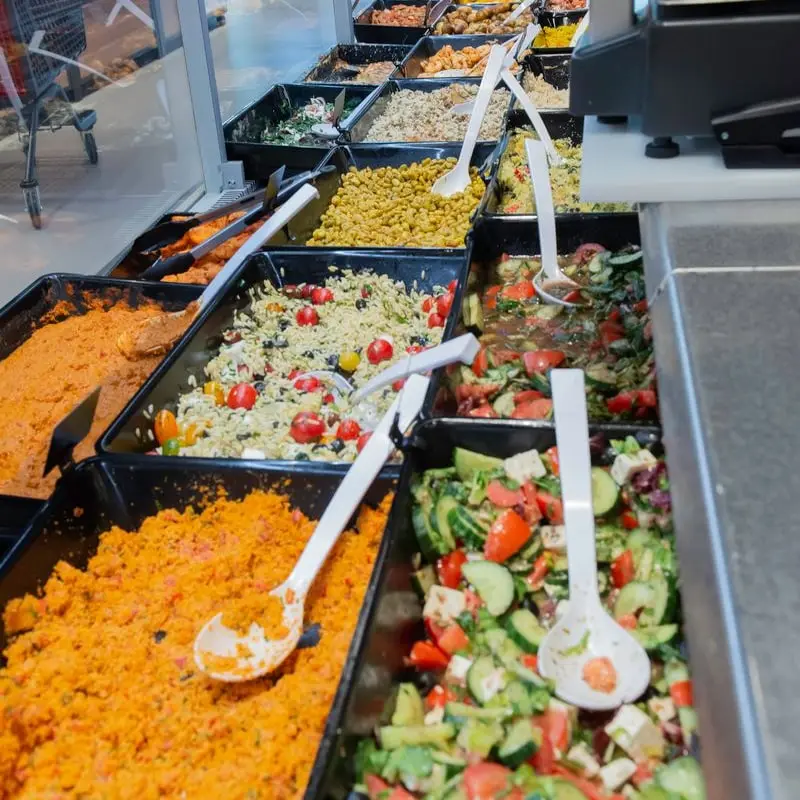
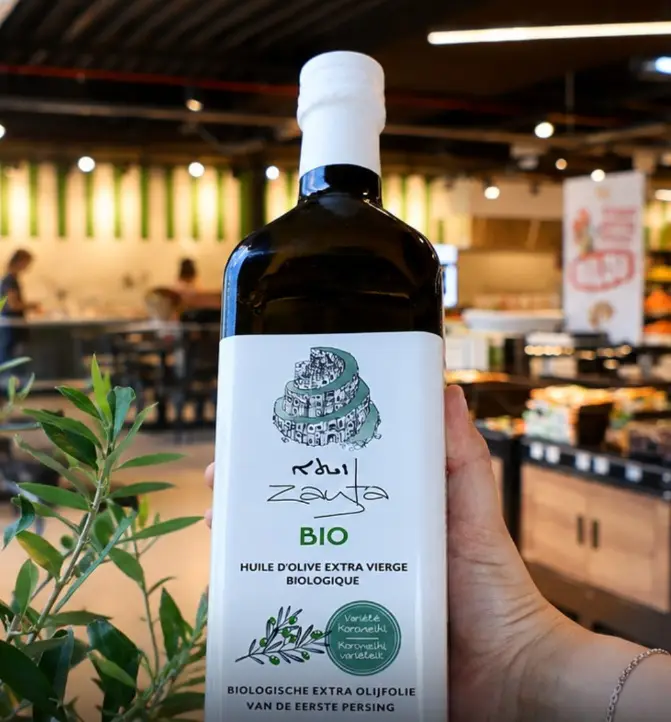
In the fine grocery aisle there are oils from everywhere: Italian, Spanish, Greek, Portuguese. And then there is Zayta, which did not arrive through a supplier. It comes from our trees.
Our trees, in Crete
Our family has its olive trees in Crete. The harvest, the press, the cans: it is the same hand from start to finish, and that is why we know what is inside. A shop that grows what it sells is not something you come across often in Walloon Brabant.
Extra virgin, first press: what that means
“Extra virgin” is not a sales line, it is a regulated category: the oil is extracted mechanically, without heat or solvent, and its acidity stays below the lowest threshold. In practice, it is the juice of the olive, nothing else.
You can see it, too: that deep, dense green that speaks for itself as soon as the spoon is full.
Where to use it
Raw, preferably: that is where you recognise it.
- Swirled over the hummus from the deli counter, before it goes on the table.
- On a piece of feta, with oregano, and nothing else.
- In a fattoush salad, where it stands up to the lemon.
- On Lebanese bread straight from the oven, while it is still warm.
Taste it before you buy
Just ask at the grocery counter: letting you taste is part of the job. We will also tell you what sets it apart from the Italian and Spanish oils on the next shelf: they are not the same olives, and they do not go on the same dishes.